
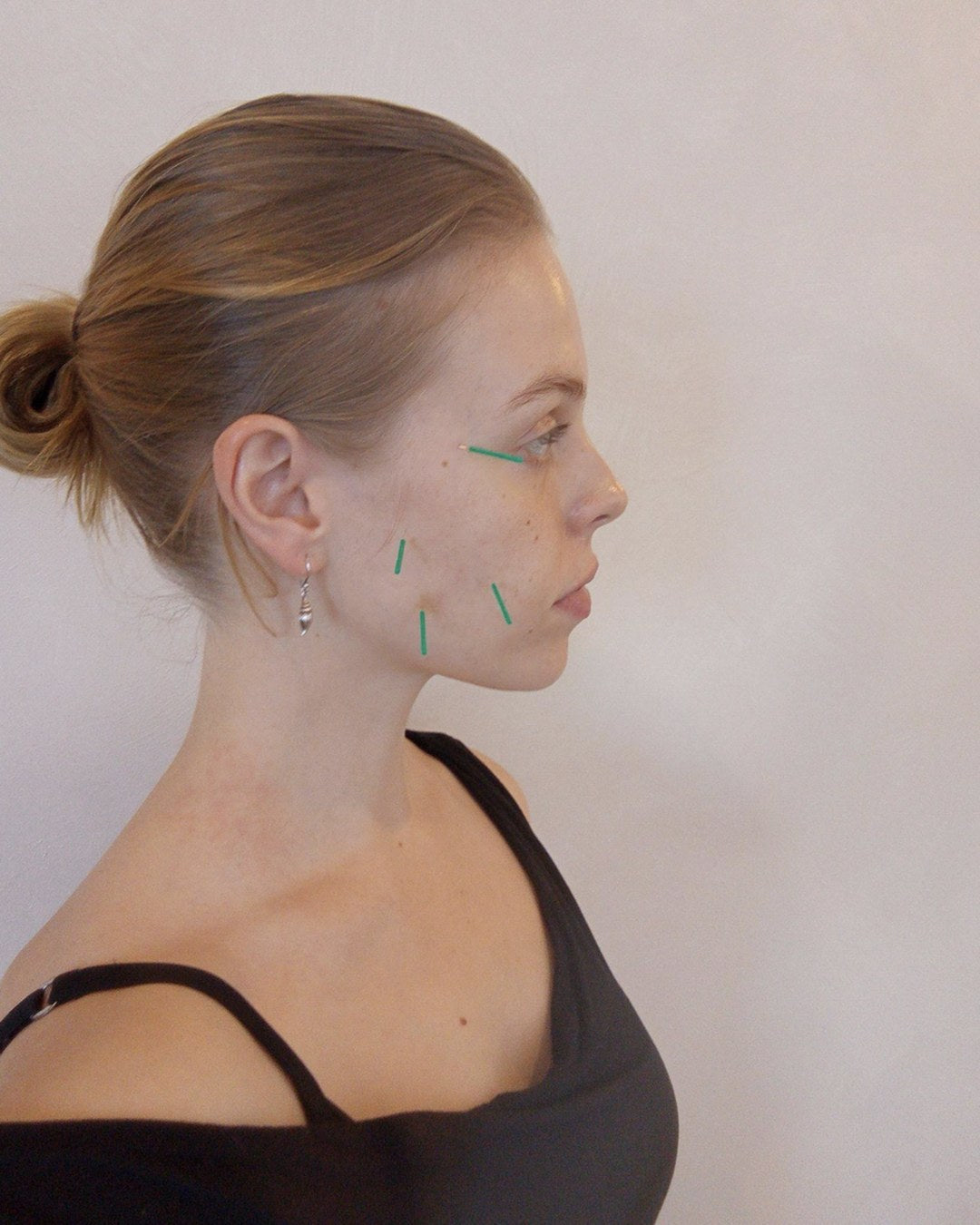
Jaw Tension: Why It Happens and How Acupuncture May Help
Jaw tension is one of those things many of us do without even realising it, until suddenly your jaw feels like it's been doing a workout you definitely didn't sign up for.
Maybe you catch yourself clenching your teeth while answering emails, concentrating at work or sitting in traffic trying to tame the road rage. Or perhaps you wake up with a sore jaw, tight temples, or a headache and realise your teeth have apparently been having an argument all night.
For some people, jaw tension comes and goes. For others, it can become a bit of a daily habit, affecting comfort, sleep and even how freely the jaw moves.
What Does Jaw Tension Feel Like?
Jaw tension can present differently from person to person. Common signs include:
- Clenching or grinding the teeth
- Tightness or aching through the jaw
- Tenderness through the cheeks
- Headaches around the temples
- Soreness when chewing
- Clicking or popping around the jaw joint
- A feeling of restriction when opening the mouth
- Tension that extends into the neck and shoulders
Some people are very aware that they clench their jaw, while others only notice the muscular soreness afterwards.
Why Do We Hold Tension in the Jaw?
The jaw is an area where many of us unconsciously hold tension.
Stress is a common contributor. During periods of concentration, anxiety or emotional stress, you may find yourself tightening the muscles around the jaw without noticing. Teeth grinding or clenching during sleep can also contribute to morning jaw soreness and headaches.
Other factors may include posture, prolonged computer work, chewing habits, dental issues and dysfunction around the temporomandibular joint, commonly known as the TMJ.
The Muscles Behind Jaw Tension
Two of the main muscles I focus on when treating jaw tension are the masseter and temporalis.
The masseter is the strong chewing muscle located along the side of the jaw. You can feel it very easily by placing your fingers on your cheek and gently clenching your teeth. When this muscle becomes tight or overworked, it can feel tender, hard or achy.
The temporalis is a broad muscle that sits over the side of the head and temples. It also plays an important role in chewing and jaw movement. This is why people who clench their jaw may not only feel discomfort around the jaw itself, they may also experience tightness or headaches through the temples.

How I Approach Jaw Tension With Acupuncture
When treating jaw tension, I don't only look at where the pain is located. I also palpate the muscles around the jaw, temples and neck to identify areas of muscular tightness and tenderness.
Acupuncture points may be selected around the masseter, temporalis and jaw joint, alongside points elsewhere on the body depending on the individual presentation. For example, points around the jaw may be combined with distal points such as LI4, a commonly used acupuncture point for conditions affecting the face and jaw.
The treatment is tailored to the person rather than using the exact same combination of points every time. The aim is to help reduce muscular tension, settle areas of sensitivity and support more comfortable movement through the jaw.

Adding Massage and Gua Sha
Acupuncture is often only one part of how I approach a tight jaw. I may also incorporate massage and gua sha through the masseter, temporalis, jawline and surrounding muscles.
Slow massage techniques can be used to work through particularly tight areas of the masseter and temples, while gua sha allows gentle pressure and movement through the tissues around the face and jaw. I may also include massage through the neck and shoulders, particularly when there is tension through the upper trapezius, SCM or surrounding muscles, as jaw tension often goes hand in hand with tightness through these areas.
For many people, combining acupuncture with massage and gua sha creates a treatment that feels both therapeutic and deeply relaxing.

The Jaw and Neck Connection
Jaw tension rarely exists completely in isolation.
People who clench their jaw often also carry tension through the neck, shoulders and upper back.
The position of the head and neck can influence how the muscles around the jaw are working, particularly if you spend long periods looking at a computer or phone.
Because of this, I will often assess and treat the neck and shoulders alongside the jaw rather than focusing only on the face.
What Can You Do at Home?
One of the simplest things you can do is start noticing what your jaw is doing during the day.
At rest, your teeth generally don't need to be touching. Try allowing the tongue and jaw to relax and keeping a small amount of space between the upper and lower teeth.
You can also try:
- Applying gentle warmth around the jaw
- Lightly massaging the masseter and temples
- Taking regular breaks during prolonged computer work
- Becoming aware of clenching during stressful or highly focused tasks
- Avoiding excessive gum chewing when the jaw already feels irritated
- Working on neck and shoulder tension if these areas also feel tight
Sometimes simply becoming aware of the habit can make a significant difference.
When Should Jaw Pain Be Assessed?
Acupuncture and manual therapies can be useful as part of the management of muscular jaw tension, but persistent or significant jaw symptoms should also be properly assessed.
It is particularly important to speak with your dentist or another appropriate healthcare professional if you experience ongoing pain, significant clicking or locking, difficulty opening your mouth, tooth pain, changes in your bite or persistent nighttime grinding.
A More Complete Approach to Jaw Tension
Jaw tension isn't always just about the jaw.
Stress, muscular tension, posture, sleep and habitual clenching can all contribute to what you're feeling. My approach combines acupuncture with techniques such as massage and gua sha to work through the jaw, temples, neck and surrounding areas, helping the whole region feel less guarded and more relaxed.
If you've noticed that you're constantly clenching your jaw, waking with tightness, or carrying tension through your temples and neck, it may be worth looking at the pattern as a whole rather than simply treating the sore spot.
An Acupressure Guide You Can Use at Home
Follow along with me as I show you a few simple massage techniques and acupressure points that may help encourage the muscles around the jaw, temples, neck and shoulders to relax.
Keep the pressure comfortable and gentle. Acupressure shouldn't feel sharply painful, and you can spend around 20 to 30 seconds on each point, breathing slowly as you go.
Start With the Neck and Shoulders
Jaw tension often doesn't stop at the jaw. If you've been clenching, working at a computer or carrying stress through your upper body, you may also notice tension through the neck and shoulders.
Start by using your fingertips to make slow circular movements through the tops of the shoulders and along the muscles at the sides and back of the neck. You can also gently squeeze and knead the upper shoulder muscles, working from the base of the neck out towards the shoulder.
Keep your movements slow and comfortable, and avoid applying firm pressure directly over the front or sides of the throat.

Massage the Temporalis
The temporalis is the broad muscle that sits over the side of the head and temples and helps with chewing and closing the jaw.
Place two or three fingertips over your temples. If you gently clench your teeth, you may feel the muscle tighten underneath your fingers. Relax your jaw again and begin making slow, gentle circles over the temples, gradually working slightly upwards and backwards through the muscle.
Spend around 30 to 60 seconds on each side, allowing your jaw to soften as you go.

ST6
ST6 is one of my favourite points to use around a tight jaw because it sits directly over the masseter, one of our main chewing muscles. To find it, gently clench your teeth and feel for the muscle that becomes prominent along the side of your jaw, just above and slightly forward of the angle of the jaw. Relax your teeth and apply gentle circular pressure to the area.
This point is traditionally used for concerns involving the jaw, teeth and face and is commonly selected when there is jaw tightness or discomfort.

SJ17
SJ17 sits just behind the earlobe. To locate it, feel for the small depression between the back of the jawbone and the bone behind your ear. Using one fingertip, apply very gentle pressure here. This is a sensitive area, so you don't need to press deeply. SJ17 is traditionally used for concerns involving the jaw, ear and surrounding facial region.

Taiyang
Taiyang is an extra acupuncture point located at the temple.
You can find it in the soft depression slightly behind the outer corner of the eye and the end of the eyebrow. Using your fingertips, make slow circles over the area for around 20 to 30 seconds. I particularly like this point when jaw clenching is accompanied by tight temples or tension type headaches, as it sits directly over the temporalis muscle.
LI4
LI4 is located on the back of the hand between the thumb and index finger. An easy way to find it is to bring your thumb and index finger together and look for the highest point of the muscle that forms between them. Relax the hand before applying pressure.
Massage the area with the thumb of your opposite hand for around 20 to 30 seconds, then repeat on the other side. LI4 is traditionally considered an important distal acupuncture point for the face and mouth, which is why you'll often see it included alongside local jaw points.

Please do not use this point if pregnant, unless advised by your practitioner.
SI18
SI18 is located on the cheek, directly below the outer corner of the eye, in a small depression just underneath the cheekbone. This point is traditionally used for concerns involving the face and jaw and sits close to the muscles around the cheek and masseter. Use one or two fingertips to apply gentle circular pressure for around 20 to 30 seconds.

Frequently Asked Questions
What causes jaw tension and clenching?
Stress, anxiety, concentration, posture, prolonged computer work, chewing habits, dental issues and dysfunction around the temporomandibular joint (TMJ) may all contribute to jaw tension and clenching.
Can acupuncture help with a tight or clenched jaw?
Acupuncture points may be selected around the masseter, temporalis and jaw joint, often combined with distal points such as LI4, alongside massage and gua sha, to help reduce muscular tension and support more comfortable jaw movement.
Are there acupressure points I can use at home for jaw tension?
Yes. Points such as ST6, SJ17, Taiyang, LI4 and SI18 are traditionally used for jaw, temple and facial tension and can be gently massaged at home. LI4 should not be used during pregnancy unless advised by your practitioner.
When should jaw pain be assessed by a dentist?
Speak with your dentist or another appropriate healthcare professional if you experience ongoing pain, significant clicking or locking, difficulty opening your mouth, tooth pain, changes in your bite or persistent nighttime grinding.


Leave a comment
This site is protected by hCaptcha and the hCaptcha Privacy Policy and Terms of Service apply.