
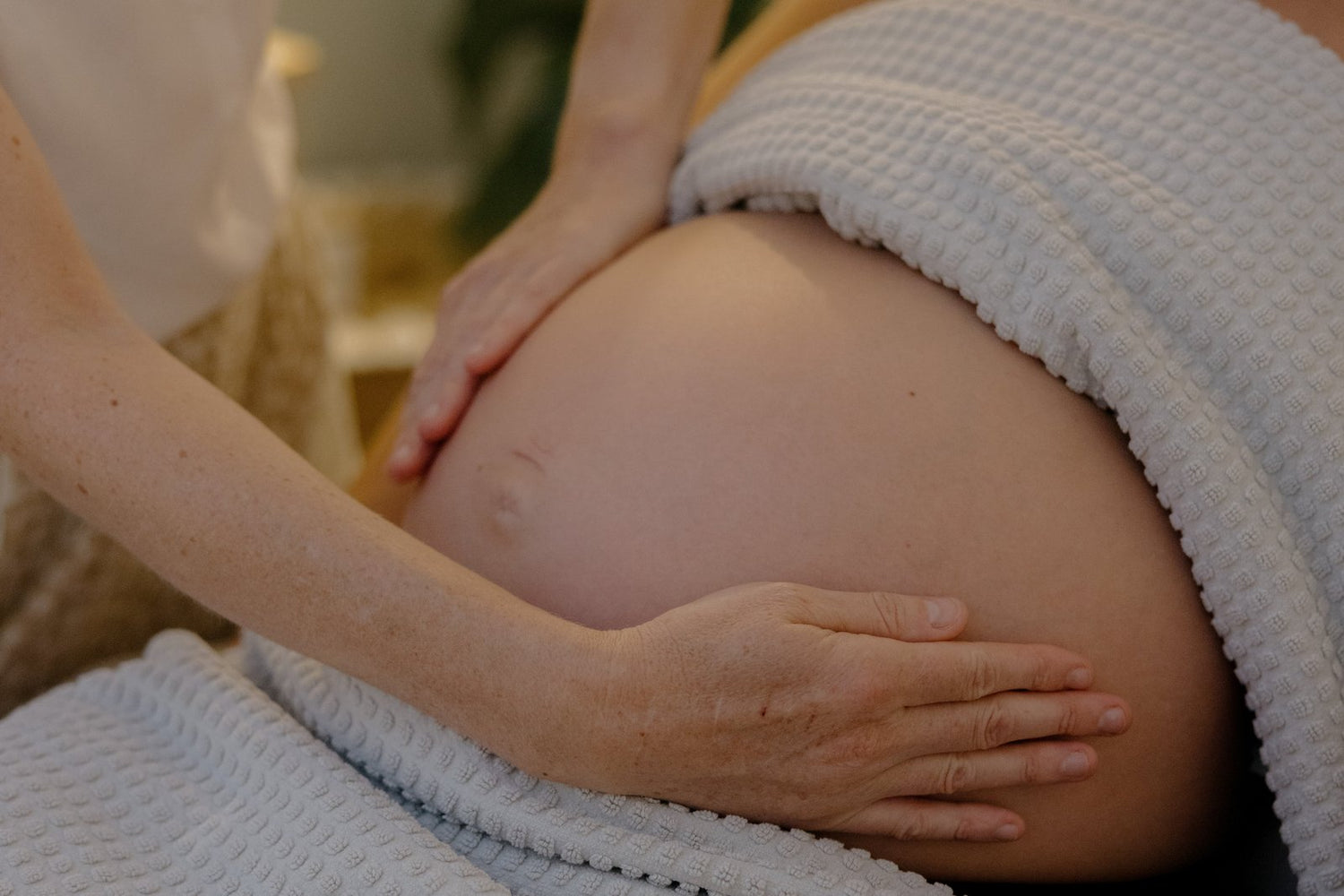
Pregnancy Pelvic and Lower Back Pain: Simple Ways to Support Comfort
I always admire the women who walk through our doors at Vyne Health and everything their bodies move through during pregnancy.
Your body is constantly adapting to support your growing baby. Your posture changes, your centre of gravity shifts, and the muscles surrounding your back, abdomen, and pelvis begin working differently.
As pregnancy progresses, particularly during the later months, you may begin to notice discomfort through your lower back, hips, buttocks, pubic bone, groin, or pelvis.
Some women experience a general, persistent ache, while others notice sharper discomfort during particular movements, such as rolling over in bed, climbing stairs, or getting in and out of the car.
Although pelvic and lower back pain can be common during pregnancy, this does not mean you simply have to put up with it.
What Can Pregnancy Related Pelvic Pain Feel Like?
Pregnancy related pelvic girdle pain may be felt:
- Across the lower back
- Around one or both hips
- Through the buttocks or sacroiliac joints
- Around the tailbone
- At the front of the pelvis or pubic bone
- Through the groin or inner thighs
- When walking or climbing stairs
- When standing on one leg
- When rolling over or getting out of bed
- When getting in or out of the car
The discomfort may affect one side or both sides and can vary from day to day. Activities that place more weight through one side of the pelvis may be particularly uncomfortable [1].
Why Can Pelvic and Lower Back Discomfort Develop?
During pregnancy, your body undergoes hormonal and physical changes to accommodate your growing baby and prepare for birth.
Hormonal changes affect the ligaments and tissues surrounding your joints. At the same time, the growing uterus and baby shift your centre of gravity and change how weight is distributed through your spine, hips, and pelvis [2].
Your abdominal, pelvic, and back muscles may need to work differently to support these changes. This can make certain areas feel tight, tired, or overworked.
Discomfort may be more noticeable during activities such as:
- Standing on one leg to get dressed
- Taking large steps
- Walking or standing for long periods
- Frequently climbing stairs
- Carrying a toddler on one hip
- Lifting heavy objects
- Getting in and out of a low car
- Rolling over quickly in bed
Identifying the movements that aggravate your symptoms can help you make small changes throughout the day.
1. Use Pillows and Cushions for Support
Never underestimate the value of a strategically placed pillow during pregnancy.
When sleeping on your side, try placing a pillow between your knees and ankles. This can help keep your hips, knees, and pelvis in a more comfortable position. You may also find it helpful to place another pillow underneath your belly for additional support.
From 28 weeks of pregnancy, Australian health guidance recommends going to sleep on your side for both nighttime sleep and daytime naps. Either side is suitable. If you wake up on your back, you do not need to panic, simply roll back onto your side and continue sleeping [3].
You can also experiment with placing cushions:
- Behind your lower back when sitting
- Under your feet if they do not comfortably reach the floor
- Between your knees when resting
- Under your belly while lying on your side
- Behind your upper back in a supported, slightly reclined position
The goal is not to force your body into a perfect posture but to find positions in which you feel supported and your muscles can relax.
2. Keep Your Knees Together When Turning
Say goodbye to the graceful art of simply rolling over in bed. In the later stages of pregnancy, changing positions can feel more like a carefully coordinated combination of rolling, wriggling, and contorting.
Try bending your knees and keeping them gently together as you roll onto your side. To get out of bed, remain on your side, bring your legs towards the edge of the bed, and use your arms to help push yourself upright.
You can take a similar approach when getting in and out of the car. Sit down first and then move both legs into the car together, rather than stepping in one leg at a time.
Keeping your legs moving together may reduce uneven loading through the pelvis [1].
3. Choose Gentle Movement Rather Than Pushing Through Pain
Remaining active during an uncomplicated pregnancy can be beneficial, but movement should still feel appropriate for your body and stage of pregnancy. For some of you ladies, this may be your gentle reminder to slowww down. Easier said than done, I know, especially when you're being super mums, looking after toddlers, and trying to keep everything else running. But please be kind to yourself and try to find even a small pocket of time during the day to put your feet up, breathe, and let your body rest.
Complete bed rest is not generally recommended for pelvic girdle pain unless your doctor has specifically advised it. However, this does not mean that you should push through movements that clearly worsen your symptoms [1].
You might find it helpful to:
- Take shorter walks
- Break household tasks into smaller sections
- Change position regularly
- Sit down to put on pants, socks, and shoes
- Take stairs one step at a time
- Take smaller steps when walking
- Reduce activities that require standing on one leg
- Avoid long periods of sitting or standing
- Rest before your discomfort becomes overwhelming
Stop an exercise or movement if it causes or worsens your pain. You should also stop exercising and seek medical advice if you experience vaginal bleeding, dizziness, chest pain, unexplained shortness of breath, calf pain, sudden swelling, abdominal or pelvic pain, or reduced fetal movement [4].
A women's or pelvic health physiotherapist can assess how you are moving and provide exercises suited to your individual symptoms and stage of pregnancy.
4. Use Warmth Carefully
A warm shower or heat pack may feel soothing across the lower back, hips, or buttocks. Pregnancy, Birth and Baby includes heat and cold packs among the home strategies that may be used for pelvic girdle pain [1].
When using a heat pack:
- Keep it comfortably warm rather than very hot
- Follow the product's instructions
- Place a layer of clothing or a towel between the pack and your skin
- Check your skin regularly
- Limit the amount of time it remains in place
- Do not fall asleep with the heat pack on
- Stop if you feel overheated, dizzy, or uncomfortable
If you are uncertain about using heat during pregnancy, speak with your midwife, GP, or obstetrician.
5. Consider Supportive Shoes and Garments
It may be time to say goodbye to the high heels and tight fitting clothes for a little while, and Adam Sandler style is officially encouraged. Jokes aside, comfortable, supportive, low heeled shoes may help reduce unnecessary strain while you are walking or standing. Loose, comfortable clothing can also make a big difference, particularly as your body continues to change. Some women find a pregnancy or pelvic support garment helpful, but choosing the correct type and fit is important. It should feel gently supportive, not restrictive, uncomfortable, or painful. At this stage, comfort really is the priority.
Pregnancy, Birth and Baby recommends asking a physiotherapist for advice about choosing and fitting a pelvic support garment and using it for short periods when appropriate [1].
6. Avoid Carrying Everything on the Same Side
It can be tempting to rest your handbag, shopping, or toddler on the same hip each time.
Where possible, try to distribute weight evenly, use a backpack with two straps, or alternate the side on which you carry lighter items. It may also be helpful to avoid heavy lifting and ask for assistance with household tasks that trigger your discomfort [1].
Supporting your body during pregnancy is not about doing everything perfectly. Sometimes it simply means finding ways to make daily tasks a little easier.
Where May Acupuncture Fit?
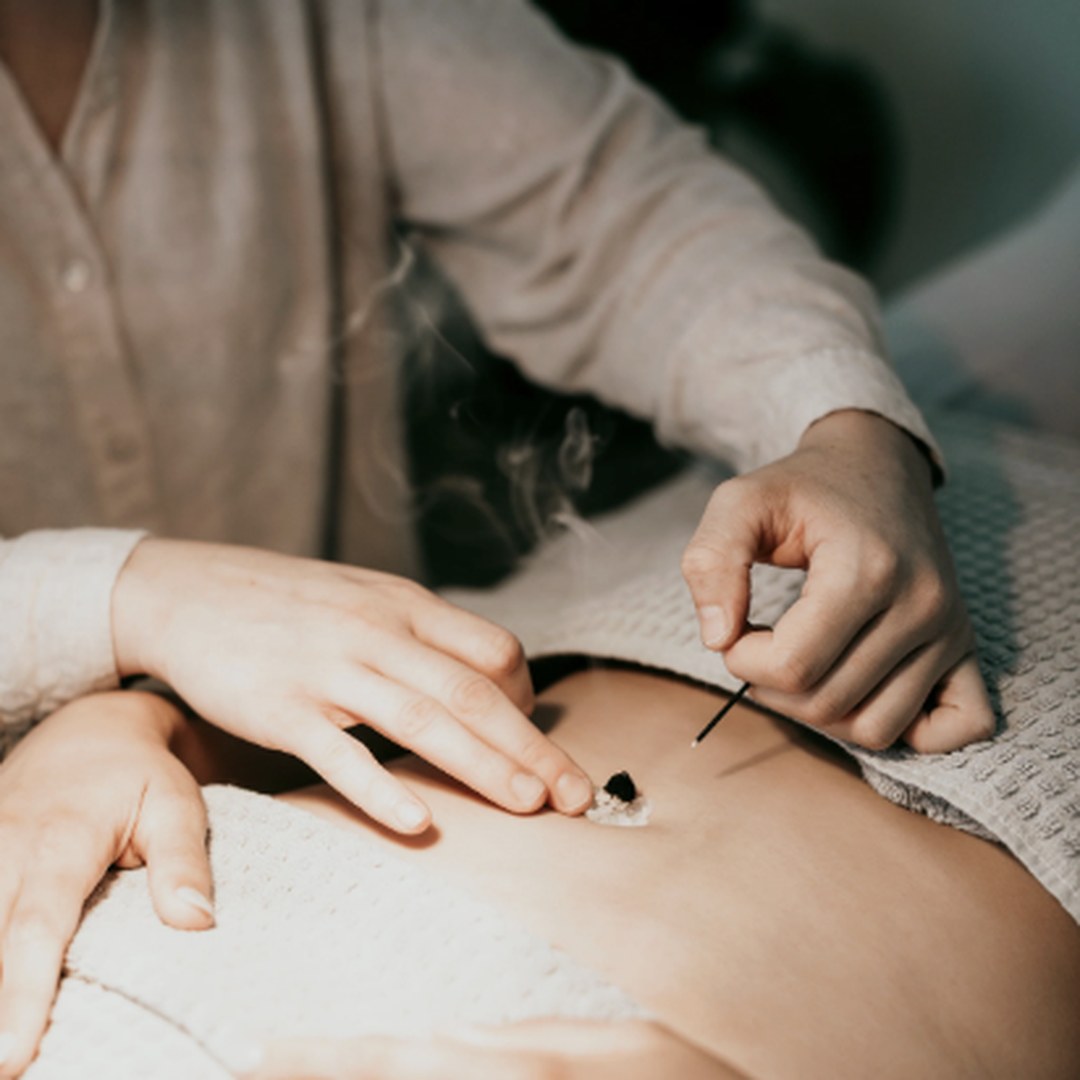
Some women choose pregnancy acupuncture as one part of their broader care plan for pelvic, hip or lower back discomfort.
At Vyne Health, every pregnancy appointment is individualised. Before treatment, we take time to discuss:
- Where you are experiencing discomfort
- Which movements or positions aggravate or relieve it
- How it affects your sleep, mobility and daily activities
- Your stage of pregnancy
- Your pregnancy and medical history
- Your current maternity care
- Whether you are receiving support from a physiotherapist or another healthcare practitioner
Your comfort and informed consent are prioritised throughout the appointment. Treatment positions can be adapted using pillows, bolsters and side lying positions so that you are not required to lie flat or remain in a position that increases your discomfort.
Depending on your presentation, preferences and clinical suitability, an appointment may include:
- Individually selected acupuncture points
- Points around the lower back, hips, gluteal muscles or sacral area, where appropriate
- Acupuncture points away from the uncomfortable area, including points on the legs, feet, hands or arms
- Gentle massage through selected areas of muscular tension
- Gentle moving cupping across selected areas of the back, hips or gluteal muscles
- Brief stationary cupping where clinically appropriate
- General guidance about comfortable movement, rest and positioning at home
All techniques are adjusted according to your stage of pregnancy, comfort, sensitivity and individual presentation.
Treatment will look different for everybody. For example, someone experiencing a general muscular ache across the lower back may receive a different treatment from someone experiencing discomfort around the pubic bone, sacroiliac region, pelvis or one side of the hip.
What Does the Research Say?
Several randomised controlled trials have investigated acupuncture for pregnancy related pelvic and lower back pain.
One trial comparing acupuncture with physiotherapy reported improvements in pain and the ability to perform everyday activities among pregnant participants with lower back and pelvic pain [5].
Another trial involving women with pelvic and lower back pain in late pregnancy reported greater pain relief in the acupuncture group than in the group receiving standard care alone [6].
A separate trial investigating pregnancy-related pelvic girdle pain found that both acupuncture and stabilising exercises provided additional benefit when combined with standard maternity care. Some measures of evening pelvic pain favoured acupuncture [7].
However, a later double-blind trial comparing acupuncture with non-penetrating sham acupuncture found no statistically significant difference in pain between the groups. The acupuncture group did report greater improvement in some measures of daily function, although this was not seen across all outcomes [8].
These studies differed in size, treatment methods, comparison groups and the type or stage of pregnancy related pain being treated. Their findings should therefore be interpreted cautiously and cannot predict how an individual will respond.
Why Have We Also Included General Low Back Pain Research?
Acupuncture has been studied more extensively for chronic lower back pain in the general adult population. We have included two selected randomised controlled trials to provide broader context about acupuncture's use for musculoskeletal lower back pain.
These trials were not conducted in pregnant populations and did not investigate pregnancy related back or pelvic pain. Pregnancy related discomfort can involve different physical changes, causes, safety considerations and treatment requirements. The results therefore cannot be directly applied to pregnancy or used to predict how a pregnant individual may respond.
General Chronic Low Back Pain in Non Pregnant Adults
A large randomised controlled trial involving adults with chronic lower back pain compared traditional acupuncture, sham acupuncture and conventional treatment, which included approaches such as medication, physiotherapy and exercise. Both acupuncture groups had higher response rates than the conventional-treatment group after six months. However, there was no statistically significant difference between traditional acupuncture and sham acupuncture [9].
Another randomised controlled trial compared individualised acupuncture, standardised acupuncture, simulated non-penetrating acupuncture and usual care for chronic lower back pain. The three acupuncture and simulated acupuncture groups experienced greater improvements in back-related function than the usual-care group. However, there were no meaningful differences between individualised acupuncture, standardised acupuncture and simulated acupuncture [10].
These studies provide broader background about acupuncture and chronic musculoskeletal lower back pain. However, they do not establish that traditional acupuncture is superior to sham or simulated acupuncture, and they do not provide evidence specifically for pregnancy related back or pelvic pain.
The general trials are included separately for context only. Statements about pregnancy related pain are based on research involving pregnant participants.
Acupuncture is presented as one possible component of a broader care plan rather than a guaranteed treatment. We do not promise a particular result, and individual experiences may vary.
Acupuncture, massage and cupping do not replace assessment, diagnosis or care from your midwife, GP, obstetrician or physiotherapist. Where appropriate, we may recommend speaking with another member of your maternity care team or seeking further assessment.
When Should You Seek Medical Advice?
New, persistent, or worsening pelvic or lower back pain should be discussed with your midwife, GP, or obstetrician.
Although many cases are musculoskeletal, back or pelvic pain during pregnancy can occasionally be associated with other conditions, including urinary tract infections, preterm labour, or, very rarely, spinal nerve compression [2].
Seek prompt medical advice if your pain:
- Is sudden, severe, or rapidly worsening
- Prevents you from walking or completing normal activities
- Occurs following a fall or injury
- Is accompanied by fever or feeling generally unwell
- Occurs with pain or burning when urinating
- Is accompanied by blood in your urine
- Occurs with abdominal cramps or regular contractions
- Is accompanied by vaginal bleeding
- Occurs with fluid leaking from the vagina
- Is associated with reduced or changed fetal movement
- Is accompanied by numbness, tingling, or weakness in your legs
- Is associated with difficulty controlling your bladder or bowels
- Feels different from your usual pregnancy discomfort
Contact your maternity care team or local hospital urgently if you experience signs of preterm labour, fluid loss, significant bleeding, or reduced fetal movement.
Call Triple Zero on 000 if you have very heavy bleeding, severe pain, feel extremely unwell, or experience significant limb weakness or loss of bladder or bowel control [2].
You are never wasting your healthcare provider's time by checking a new or concerning symptom.
A Final Reminder
Your body is doing an extraordinary amount of work during pregnancy.
Pelvic and lower back discomfort may be common, but your experience still matters. Small changes to your sleeping position, daily movement, footwear, rest, and physical support may make your day feel more manageable.
Most importantly, you do not have to wait until your discomfort becomes overwhelming before asking for help.
At Vyne Health, we work alongside your existing maternity care team to provide individualised pregnancy acupuncture and supportive care throughout the different stages of pregnancy.
Book an appointment with us today at Vyne Health Acupuncture Gold Coast, Suite 9, 2098 Gold Coast Highway, Miami QLD 4220.
Frequently Asked Questions
Is it normal to have pelvic or back pain during pregnancy?
Pelvic and lower back discomfort can be common as the body adapts during pregnancy, though this does not mean you simply have to put up with it. Support strategies and individualised care may help.
When should I see a doctor about pregnancy back or pelvic pain?
Seek prompt medical advice if pain is sudden, severe, or rapidly worsening, follows a fall, or is accompanied by fever, bleeding, reduced fetal movement, or numbness and weakness in the legs.
Can acupuncture help with pregnancy related pelvic or back pain?
Some women choose pregnancy acupuncture as part of their broader care plan. Research suggests possible benefit, though study quality is limited, and acupuncture is not a replacement for care from your midwife, GP, obstetrician, or physiotherapist.
If you have any questions about pregnancy acupuncture for pelvic and lower back pain, please reach out to us via the contact page below.
References
[1] Healthdirect Australia. (2024, August). Pelvic girdle pain in pregnancy. Pregnancy, Birth and Baby. https://www.pregnancybirthbaby.org.au/pelvic-pain-during-pregnancy
[2] Healthdirect Australia. (2026, February). Backache in pregnancy. Pregnancy, Birth and Baby. https://www.pregnancybirthbaby.org.au/backache-in-pregnancy
[3] Healthdirect Australia. (2024, May). Sleep during pregnancy. Pregnancy, Birth and Baby. https://www.pregnancybirthbaby.org.au/sleep-during-pregnancy
[4] Healthdirect Australia. (2025, August). Exercising during pregnancy. Pregnancy, Birth and Baby. https://www.pregnancybirthbaby.org.au/exercising-during-pregnancy
[5] Wedenberg, K., Moen, B., & Norling, A. (2000). A prospective randomized study comparing acupuncture with physiotherapy for low-back and pelvic pain in pregnancy. Acta Obstetricia et Gynecologica Scandinavica, 79(5), 331–335. https://pubmed.ncbi.nlm.nih.gov/10830757/
[6] Kvorning, N., Holmberg, C., Grennert, L., Aberg, A., & Akeson, J. (2004). Acupuncture relieves pelvic and low-back pain in late pregnancy. Acta Obstetricia et Gynecologica Scandinavica, 83(3), 246–250. https://doi.org/10.1111/j.0001-6349.2004.0215.x
[7] Elden, H., Ladfors, L., Olsen, M. F., Ostgaard, H. C., & Hagberg, H. (2005). Effects of acupuncture and stabilising exercises as adjunct to standard treatment in pregnant women with pelvic girdle pain: Randomised single-blind controlled trial. BMJ, 330, 761. https://doi.org/10.1136/bmj.38397.507014.E0
[8] Elden, H., Fagevik-Olsen, M., Ostgaard, H. C., Stener-Victorin, E., & Hagberg, H. (2008). Acupuncture as an adjunct to standard treatment for pelvic girdle pain in pregnant women: Randomised double-blinded controlled trial comparing acupuncture with non-penetrating sham acupuncture. BJOG, 115(13), 1655–1668. https://doi.org/10.1111/j.1471-0528.2008.01904.x
[9] Haake, M., Müller, H. H., Schade-Brittinger, C., et al. (2007). German Acupuncture Trials for chronic low back pain: Randomized, multicenter, blinded, parallel-group trial with three groups. Archives of Internal Medicine, 167(17), 1892–1898. https://doi.org/10.1001/archinte.167.17.1892
[10] Cherkin, D. C., Sherman, K. J., Avins, A. L., et al. (2009). A randomized trial comparing acupuncture, simulated acupuncture, and usual care for chronic low back pain. Archives of Internal Medicine, 169(9), 858–866. https://doi.org/10.1001/archinternmed.2009.65

Leave a comment
This site is protected by hCaptcha and the hCaptcha Privacy Policy and Terms of Service apply.