
A Chinese Medicine Perspective on Supporting Your Body Through the Cooler Months
The cooler weather has officially settled over the Gold Coast, and getting out of bed in the morning is beginning to feel like a personal attack. Luckily, I have a pair of snuggly slippers waiting to rescue my feet from the cold.

(Yes, they are llama slippers. Are they impractical? Yes. Have I tripped over them? Yes. Will I keep wearing them because they are cute? Absolutely.)
You may have also noticed co-workers, friends, or family slowly dropping like flies with the latest cold, flu, or mysterious case of "something going around." Naturally, this can leave you wondering whether your turn is coming next.
At Vyne Health, Gold Coast, we believe the seasonal shift is a good reminder to slow down and give your body a little extra support. In this blog, we'll explore a few Chinese Medicine perspectives on the cooler months, along with some simple and practical tips you can use at home.
While the long, beachy days may be taking a break for now, winter also gives us the perfect excuse to embrace warm drinks, cosy socks, nourishing meals, and a slightly slower pace. Think of it as permission to protect your energy like it's your full time job.
Protecting Yourself From Wind and Cold
In Chinese Medicine, wind and cold are considered external influences that may affect the body, particularly when we are tired, run down, stressed, or not sleeping well.
The neck and upper back are especially important areas to protect. This is why Chinese Medicine often recommends wearing a scarf during the cooler months, particularly when it is windy, cold, or when you are outside early in the morning or later in the evening.
Keeping the neck, shoulders, chest, lower back, and feet warm can be a simple but supportive seasonal habit. This may be especially helpful if you notice you are more prone to:
- Tight neck and shoulders
- Headaches
- Body aches
- Cold hands and feet
- Fatigue
- Feeling run down
- Aches and pains that feel worse in cold or windy weather
While research on weather and musculoskeletal pain is mixed, cold exposure has been associated with changes in muscle performance, stiffness, and comfort in some studies [1]. From a Chinese Medicine perspective, if your body feels more stiff, sore, or achy as the weather cools, this may be a sign to prioritise warmth, gentle movement, and protection from wind and cold.
Why Chinese Medicine Pays Attention to Cold Feet
In Chinese Medicine, the Kidney channel begins on the sole of the foot at an acupuncture point called Kidney 1, before travelling upward along the inner leg and through the body. Because of this connection, the feet are often viewed as an important area to protect from prolonged cold.
This does not mean that cold feet automatically indicate a health problem. It is simply one of the reasons Chinese Medicine traditionally encourages keeping the feet warm, particularly during winter or if you are someone who naturally feels the cold.
Simple ways to keep your feet warm include:
- Wearing socks or slippers on cold floors
- Avoiding walking barefoot on tiles during winter
- Choosing enclosed shoes on cooler mornings
- Changing out of wet socks or shoes promptly
- Warming your feet before bed
- Enjoying a warm foot bath when appropriate
It is a small and simple habit, but one that can make the cooler months feel much more comfortable, and gives you a very reasonable excuse to invest in a groovy pair of slippers. See if you can beat my llama slippers, I dare you.
Eat Warm, Nourishing Foods
As we move into the cooler months, Chinese Medicine generally encourages reducing excessive cold and raw foods and focusing more on warm, cooked, nourishing meals.
Now, if you've ever had a session with us, you may already be rolling your eyes, because yes, here we are again, reminding you to eat warm meals and maybe reconsider the iced latte habit.
But there is a reason we harp on about it, especially during the seasonal shift into cooler weather. In Chinese Medicine, this time of year represents a movement from the more active, outward, warm Yang energy of the summer months into the slower, cooler, more inward Yin energy of autumn and winter.
During this transition, we want to protect the body's Yang, the warmth, energy, digestion, and vitality that help keep us feeling well. Warm, cooked foods such as soups, broths, stews, congee, and roasted vegetables are gentle on the digestive system and help support the body as the weather cools down.
So while we're not saying you can never enjoy an iced latte again, we are saying your body may thank you for choosing something a little warmer.
Some beautiful seasonal options include:
- Soups
- Broths
- Stews
- Congee
- Slow cooked meals
- Roasted vegetables
- Warm oats or porridge
- Cooked grains
- Ginger tea
- Warming herbs and spices
Foods that are often used in Chinese Medicine during the colder months include ginger, garlic, spring onion, leek, onion, mushrooms, pumpkin, sweet potato, carrots, broths, and leafy greens added into soups or cooked meals.
From a Chinese Medicine perspective, these foods help support the Spleen and digestive system, which plays an important role in energy, nourishment, and overall resilience.
From a nutritional perspective, eating a varied diet with plenty of colourful fruits and vegetables, protein, whole grains, and nutrient-rich foods helps support general immune function [2]. Vitamin C, vitamin D, zinc, and other nutrients all play roles in normal immune system function [3].
Supporting the Immune System With Daily Habits
In Chinese Medicine, immune resilience is often connected with the strength of our qi, particularly the body's protective qi, known as Wei Qi.
Wei Qi is understood as the body's outer defensive layer. It helps protect us from external influences such as wind and cold. When we are depleted, overworked, stressed, or not sleeping enough, this protective energy may become weaker.
To support your body through the cooler months, focus on:
- Getting enough sleep
- Keeping warm
- Eating regular warm meals
- Avoiding overworking when run down
- Managing stress
- Gentle movement
- Staying hydrated with warm or room temperature fluids
- Spending time outdoors when appropriate
Stress and poor recovery may also influence immune resilience. Research has shown an association between psychological stress and increased susceptibility to respiratory illness, which supports the importance of rest, stress management, and nervous system regulation during cold and flu season [4].
And this is your gentle but firm practitioner reminder to slow down.
This is the time to respect your energy boundaries, listen to your body, and become very familiar with the word no. No overcommitting. No to pushing through when you're exhausted. No to pretending five hours of sleep and three coffees is a wellness routine.
It can also be helpful to notice the early signs that your body is becoming run down, such as a scratchy throat, heavy fatigue, chills, body aches, or feeling unusually cold. These are often signs that your body is asking you to pause, rest, rug up, and nourish yourself, preferably before it forces you to. So yes, permission granted to be a couch potato on the weekend.
Foods to Include During Cold and Flu Season
While no single food can prevent illness, a nutrient rich and warming diet can support general health and immune function.
Some foods to include more regularly during the cooler months are:
- Ginger, warming and commonly used in Chinese Medicine during cold weather
- Garlic and onion, warming and often used in nourishing winter meals
- Mushrooms, a lovely addition to soups and broths
- Citrus fruits, a source of vitamin C
- Leafy greens, supportive for overall nourishment
- Pumpkin and sweet potato, grounding, warming, and easy to digest
- Broths and soups, hydrating, warm, and gentle on digestion
- Congee, a traditional rice porridge that is easy to digest and deeply nourishing
A simple winter meal could be a chicken or vegetable soup with ginger, garlic, spring onion, mushrooms, carrots, leafy greens, and rice or noodles.
Don't Forget the Basics
Chinese Medicine offers beautiful seasonal tools for supporting the body, but it is also important to remember the basics of cold and flu prevention.
Current Australian health advice recommends annual influenza vaccination for people aged 6 months and over, particularly to reduce the risk of severe illness and complications [5]. General prevention strategies such as hand hygiene, respiratory hygiene, staying home when unwell, improving ventilation, and avoiding close contact with others when sick are also important ways to reduce the spread of respiratory infections [6].
How Chinese Medicine May Support You During the Cooler Months
Acupuncture and Chinese Medicine take an individualised approach. During the cooler months, treatment may focus on supporting the body's natural resilience, easing tension, supporting circulation, supporting digestion, and helping the nervous system settle.
For some people, this season may bring more frequent colds or flus. For others, it may bring more pain, stiffness, low energy, poor sleep, or digestive changes.
Your practitioner will consider your symptoms, constitution, lifestyle, and overall health picture to guide treatment and recommendations.
Simple Seasonal Reminders
- Wear a scarf when it is cold or windy
- Keep your neck, chest, back, and feet warm
- Choose warm, cooked meals over excessive cold or raw foods
- Prioritise sleep and recovery
- Slow down when you feel run down
- Drink warm teas or room-temperature water
- Avoid sitting in cold drafts
- Rug up if aches and pains feel worse in the cold
- Support yourself with nourishing soups, broths, stews, and hot chocolate
- Follow current public health advice for cold and flu prevention
As the seasons change, small daily habits can make a meaningful difference in how supported your body feels. By keeping warm, eating nourishing foods, resting well, and listening to your body, you can move into the cooler months with greater care and awareness.
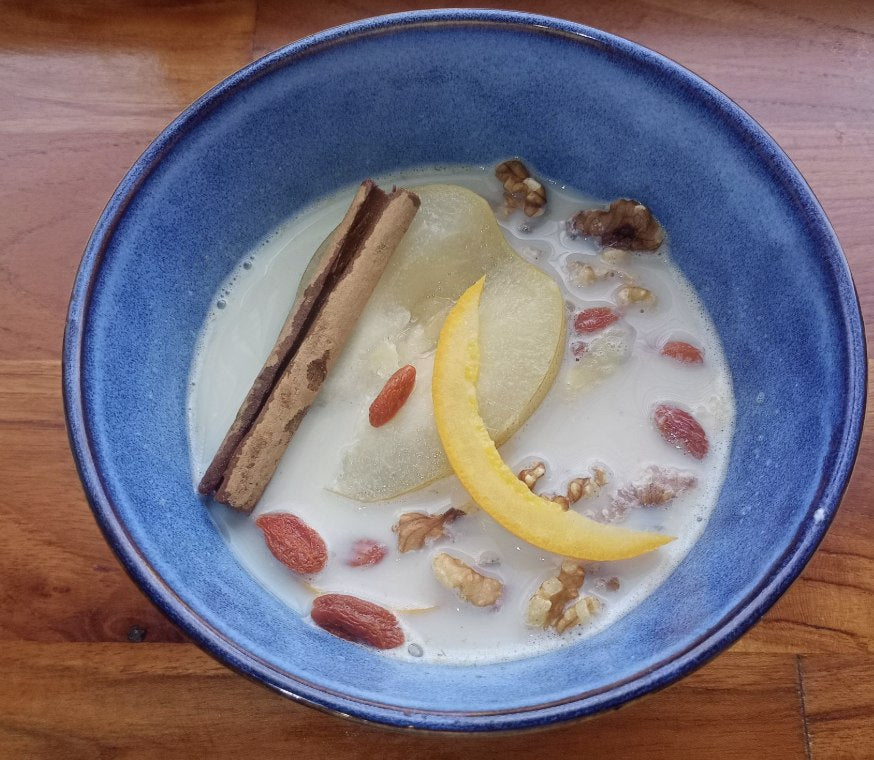
Warming Poached Pear and Ginger Oats
Waking up to a warm breakfast is exactly what you need during the cooler months, especially when getting out from under the blankets already feels like your first major achievement of the day.
These poached pear and ginger oats are warm, creamy, and gently spiced, with just enough sweetness to feel like a treat while still being a nourishing way to start the morning. The combination of soft pears, ginger, cinnamon, and orange makes the kitchen smell amazing too, which is always a bonus.
I also like trying to include a balance of carbohydrates, protein, and healthy fats in my meals. Carbohydrates, fats, and protein are the three main macronutrients that contribute energy to the diet, while choosing a variety of whole foods helps provide a broader range of nutrients [7]. For this breakfast, the oats and pear provide carbohydrates and fibre, the soy milk and collagen peptides add protein, and toppings such as walnuts, pecans, or pumpkin seeds provide healthy fats and a satisfying crunch.
Why I Add Collagen Peptides
I decided to add some collagen peptides to my oats as a convenient way to increase the protein content. Collagen peptides are produced by hydrolysing collagen into smaller protein fragments, allowing the powder to dissolve easily into foods and drinks.
Although collagen contributes protein and amino acids, it is considered an incomplete protein because it does not contain the essential amino acid tryptophan [8]. This is why I like to use it alongside another protein source, rather than relying on collagen as the only protein in the meal.
Research has explored whether hydrolysed collagen may support aspects of skin health, including hydration and elasticity. Some systematic reviews have reported promising findings, however the quality and funding of the research vary, so collagen should not be thought of as a miracle product or a replacement for a nutritious diet [9,10].
You can stir the collagen peptides through the oats towards the end of cooking, following the serving instructions on your chosen product.

(This is the protein I use.)
Why I Use Soy Milk
I use soy milk because it makes the oats lovely and creamy while also adding more protein than many other plant-based milks. Soy is considered a complete plant based protein because it contains all nine essential amino acids [11].
When choosing soy milk, I look for an unsweetened variety that has been fortified with calcium. In Australia, calcium enriched soy milk containing at least 100 mg of calcium per 100 mL can be included as an alternative to dairy milk [12].
Regular dairy milk or another milk of choice can also be used depending on your needs and preferences.
Warming Poached Pear and Ginger Oats Recipe

Recipe
Serves: 2
For the poached pears
- 2 firm pears, peeled, cored, and halved
- 2 cups water
- 2 - 3 thin slices of fresh ginger
- 1 cinnamon stick
- 1 tablespoon honey or maple syrup
- A few strips of orange peel
- 1 tablespoon goji berries, optional
- A squeeze of fresh lemon juice
For the oats
- 1 cup rolled oats
- 2 cups unsweetened milk of choice
- A pinch of cinnamon
- A pinch of sea salt
Method
- Add the water, ginger, cinnamon stick, orange peel, and honey or maple syrup to a saucepan and bring to a gentle simmer.
- Add the pears, cover, and simmer for approximately 15-25 minutes, or until tender.
- Stir in the goji berries during the final five minutes of cooking, then finish with a squeeze of fresh lemon juice.
- While the pears are cooking, add the oats, soy milk, cinnamon, and salt to a separate saucepan.
- Simmer for 5-8 minutes, stirring occasionally, until the oats are soft and creamy.
- Stir the collagen peptides through the cooked oats until dissolved.
- Spoon the oats into bowls and top with the warm poached pear and a little of the fragrant poaching liquid.
Optional toppings: chopped walnuts or pecans, pumpkin seeds, a dollop of Greek or soy yoghurt, extra cinnamon, a drizzle of honey.
A Chinese Medicine Food Therapy Perspective
In Chinese Medicine food therapy, foods are traditionally considered according to qualities such as their thermal nature, flavour, preparation method, and the organ systems with which they are associated. These classifications form part of a traditional system of dietetics and are not the same as the modern nutritional composition of food [13].
Oats are traditionally regarded as gently warming and nourishing. Chinese nutrition therapy texts commonly recommend cooked oats during colder weather and often combine them with warming ingredients such as ginger and cinnamon [13].
Fresh ginger is considered warming and pungent. It brings warmth to the recipe and helps balance the naturally cooler qualities of the pear [14].
Cinnamon is traditionally classified as warm to hot and pungent. It adds both sweetness and warmth, making it a lovely addition to porridge during the cooler months [13].
Pear is traditionally considered cooling and moistening. Pear is commonly included in Chinese food therapy when supporting dryness, particularly dryness associated with the throat and Lung system. Poaching it and combining it with ginger and cinnamon creates a warmer and gentler way to enjoy pear during winter [13].
Soy milk is also traditionally associated with nourishing body fluids and moistening dryness. In this recipe, it balances the warming oats and spices while also creating a creamy texture [13].
The result is a breakfast that combines the moistening qualities of pear and soy milk with the gentle warmth of oats, ginger, and cinnamon. Chinese Medicine food therapy is traditionally individualised, so these descriptions are intended as general education rather than personalised dietary or medical advice.
Frequently Asked Questions
Why does Chinese Medicine recommend keeping your feet warm in winter?
The Kidney channel begins at an acupuncture point on the sole of the foot called Kidney 1, before travelling up through the body. Because of this connection, Chinese Medicine traditionally views the feet as an important area to protect from prolonged cold, particularly in winter.
What foods does Chinese Medicine recommend during winter?
Warm, cooked foods such as soups, broths, stews, congee, and roasted vegetables, along with warming ingredients like ginger, garlic, spring onion, and cinnamon, are traditionally favoured over excessive cold or raw foods during the cooler months.
Can acupuncture help with colds, flu, or feeling run down in winter?
Acupuncture and Chinese Medicine take an individualised approach, and treatment may focus on supporting the body's natural resilience, easing tension, supporting circulation and digestion, and helping the nervous system settle. Your practitioner will consider your individual symptoms and health picture to guide treatment.
Is collagen powder a good source of protein?
Collagen peptides contribute protein and amino acids, but are considered an incomplete protein since they lack the essential amino acid tryptophan. It's best used alongside another protein source, such as soy milk, rather than as a standalone protein.
References
[1] Farbu EH, Höper AC, Reierth E, Nilsson T, Skandfer M. Cold exposure and musculoskeletal conditions: a scoping review. Frontiers in Physiology. 2022;13:934163. https://pmc.ncbi.nlm.nih.gov/articles/PMC9475294/
[2] Health and Wellbeing Queensland. Supporting Your Immune System This Winter. 2025. https://hw.qld.gov.au/blog/supporting-your-immune-system-this-winter/
[3] National Institutes of Health, Office of Dietary Supplements. Dietary Supplements for Immune Function and Infectious Diseases. Updated 2025. https://ods.od.nih.gov/factsheets/ImmuneFunction-HealthProfessional/
[4] Cohen S, Tyrrell DAJ, Smith AP. Psychological stress and susceptibility to the common cold. New England Journal of Medicine. 1991;325(9):606–612. https://www.nejm.org/doi/abs/10.1056/NEJM199108293250903
[5] Queensland Health. 2026 Influenza Vaccination Advice. 2026. https://www.health.qld.gov.au/clinical-practice/guidelines-procedures/diseases-infection/immunisation/schedule/influenza
[6] Australian Centre for Disease Control. Influenza (Flu). 2026. https://www.cdc.gov.au/diseases/influenza-flu
[7] Australian Government, National Health and Medical Research Council. Australian Dietary Guidelines and Macronutrient Balance. https://www.eatforhealth.gov.au/nutrient-reference-values/chronic-disease/macronutrient-balance
[8] Paul C, Leser S, Oesser S. Significant amounts of functional collagen peptides can be incorporated in the diet while maintaining indispensable amino acid balance. Nutrients. 2019;11(5):1079. https://pmc.ncbi.nlm.nih.gov/articles/PMC6566836/
[9] Pu SY, Huang YL, Pu CM, et al. Effects of oral collagen for skin anti-aging: a systematic review and meta-analysis. Nutrients. 2023;15(9):2080. https://pubmed.ncbi.nlm.nih.gov/37432180/
[10] Myung SK, et al. Effects of collagen supplements on skin aging: a systematic review and meta-analysis of randomised controlled trials. 2025. https://pubmed.ncbi.nlm.nih.gov/40324552/
[11] Harvard T.H. Chan School of Public Health. Straight Talk About Soy. https://nutritionsource.hsph.harvard.edu/soy/
[12] Healthdirect Australia. Dairy Foods. https://www.healthdirect.gov.au/dairy-foods
[13] Wu Q, Liang X. Food therapy and medical diet therapy of Traditional Chinese Medicine. Clinical Nutrition Experimental. 2018;18:1–5. https://www.sciencedirect.com/science/article/pii/S2352939317300829
[14] Kastner J. Chinese Nutrition Therapy: Dietetics in Traditional Chinese Medicine. Thieme Medical Publishers.
Editor: 24/07/2026 by Rachel Volp
Author: Shannon Smith, Chinese Medicine Acupuncturist, Vyne Health Gold Coast
Vyne Health: Suite 9 , 2098 Gold Coast Highway, Miami QLD 4220



Leave a comment
This site is protected by hCaptcha and the hCaptcha Privacy Policy and Terms of Service apply.